The Security Craftsman- October
News & Updates from Pref-Tech – October 2026 You Have a Security System. But Is It Really a System? The uncomfortable questions every technology leader should answer before the call they hop...


Your monitoring service calls at 2:17 a.m.
Something has happened, and your brain goes into overdrive. Which cameras cover the area? Who had access? Did the alarm reach the right person? Can you retrieve the video? Who is in charge? What is the procedure?
You try to remember which application to open and what credentials to use.
Then your phone rings.
It’s your CEO.
She wants answers.
You are still trying to log in.
That is a terrible time to discover that what you thought was a security system is actually a collection of security projects.
I have spent most of my career around sophisticated security environments. I have also watched organizations accumulate technology one reasonable decision at a time. A building is renovated, so cameras are added. A facility opens, so access control is installed. Equipment ages, so it gets replaced. A department has a problem, so another technology is purchased.
Every project may be successful. Yet after ten or twenty years of successful projects, the organization can still be left without a successful security system.
Projects are attractive because they have boundaries: scope, budget, schedule, beginning, end. We build them, commission them, close them out, and check the box. American business culture loves the check box.
But cameras installed, doors secured, schedules met, and budgets achieved do not answer the question that matters most: Is the organization becoming more secure?
Security works the same way. Technology matters. I run a security integration company, and I love technology. But technology alone cannot create security. A mature enterprise security system integrates people, processes, and technology around a common purpose.
Start with people. Someone has to monitor the system, investigate incidents, maintain it, own standards, coordinate Security and IT, and make decisions in an emergency. Those people have to be prepared. Training someone once during installation is not enough. We run fire drills because people do not magically perform better when stress goes through the roof. In a crisis, we fall back on what we have practiced.
The everyday use of your security system develops the muscle and mind memory you will depend on when the everyday suddenly becomes extraordinary.
Processes matter just as much, and they have to work before the emergency. Alarms need defined responses. Access has to be granted and removed predictably. Failures need clear escalation paths and recovery expectations. If you expect a critical device back online within four hours, does your vendor’s service agreement actually support that outcome? Your desired recovery time and your vendor’s promised response time may be very different things.
Then there is the technology beneath the visible technology. Cameras and card readers get the attention, but the system also depends on compute, storage, networks, operating systems, databases, applications, integrations, firmware, power, and communications infrastructure.
That infrastructure has to be resilient, backed up, highly available, and recoverable. When was the last time you proved that it is? There is an enormous difference between believing you can recover and proving you can recover.
Cybersecurity belongs in this conversation too. Operating systems and applications must be patched. Firmware across thousands of devices must be tracked. Vulnerabilities must be identified. Networks must be properly segmented. And someone must own the increasingly important intersection between physical security and cybersecurity.
And every technology owner eventually confronts another truth: everything gets old. Servers, storage, switches, cameras, controllers, operating systems. Products are discontinued. Software outgrows hardware. You can ignore the lifecycle for a while. You cannot escape it.
Do you know what reaches end of life next year? Three years from now? Five? Do you have a replacement plan? Is the money in the budget?
A multimillion-dollar enterprise security system is not something we finish. It is something we steward.
And whether we acknowledge it or not, someone is accountable for that stewardship. One day, after an incident, someone may ask what we knew, when we knew it, and what we did about it. “We were busy,” “I didn’t know,” or blaming the vendor won’t sound like leadership. It will sound like neglect.
Stewardship means knowing what you have, how the pieces depend on one another, what can fail, what must be secured, what needs to be replaced, who must be prepared, and what the lifecycle will cost. That gets difficult fast in a large, complicated, continually changing environment already competing with today’s service issues, capital projects, and budgets. The technology keeps evolving. The leadership challenge remains.
But even that misses the most important question: Why does the system exist in the first place?
What outcomes matter? Safer employees? Less unauthorized access? An investigation resolved in twenty minutes instead of four hours? Faster emergency response? Less downtime? Fewer false alarms? Better operational information? Reduced liability? Improved compliance?
Define the outcomes. Then measure them. The real measure of an enterprise security system is not the number of cameras you own, the sophistication of the technology, or last year’s capital budget. It is whether the system produces outcomes that matter to the organization.
That distinction changes the conversation in the CEO’s office. “We have 800 cameras reaching end of life, and I need $1.2 million to replace them” sounds like an expense.
Compare that with: “Here are the outcomes we agreed our security program should produce. Here is what we have achieved, the value we are creating, the risks we have reduced, and where we are falling short. Here is what reaches end of life over the next three years, and here is the investment required to sustain and improve those outcomes.”
Now you are not defending a collection of projects. You are demonstrating the value of an enterprise system.
So before you authorize the next camera, reader, server, application, or capital project, step back. Ask what you are trying to accomplish. Ask whether your people are prepared, your processes work, your infrastructure is resilient, your technology is secure and recoverable, and your lifecycle is funded. Most importantly, ask whether you can demonstrate that the system creates value.
Then ask the most convicting question of all: Do we really have an enterprise security system, or have we simply accumulated a lot of successful security projects?
If the honest answer makes you uncomfortable, good. Do not wait for the 2:17 a.m. call to find out.
Before you approve your next security project, put Security, IT, Facilities, Operations, and Finance around a table for one hour. Ask one question: “Can we demonstrate that our security system is producing the outcomes our organization expects from it?”
If the answer isn’t clear, stop there. You just found the work that matters most.
And you don’t have to do that work alone. If you’re ready to move from a collection of projects to an enterprise security system built around outcomes that matter, we’ll sit down with your team, ask hard questions, help you understand where you are and where you want to go, and begin building the path between the two.
We’re standing by if you need us.
PGRIT,
Shaun

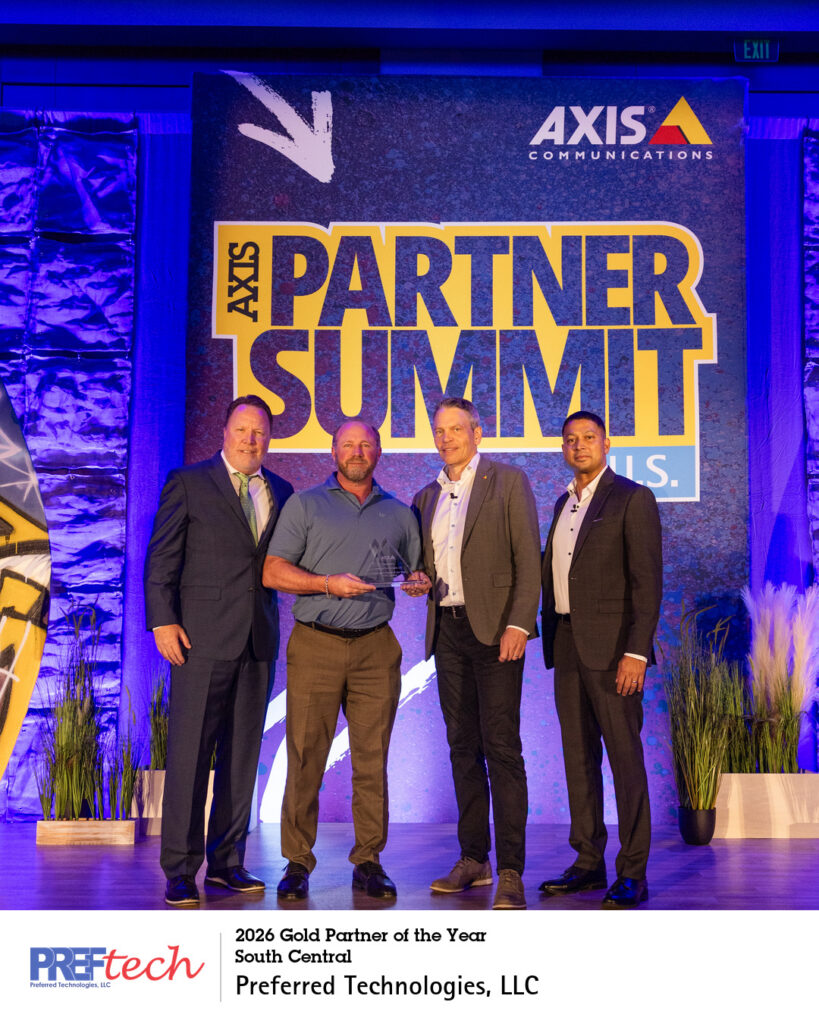
Pref‑Tech was honored to be named 2026 Gold Partner of the Year, South Central by Axis Communications at the Axis Partner Summit in Carlsbad, California. JJ Slagle and Grady Jett represented Pref‑Tech at the event, with JJ accepting the award on behalf of our team.
We’re grateful for our continued partnership with Axis and for the employees, customers, and partners who make achievements like this possible. Being recognized among Axis partners speaks to the strong relationships, technical expertise, and commitment to quality that our team brings to the work we do every day.
Pref‑Tech recently spent a weekend with CenterPoint Energy taking part in its golf tournament and BBQ cook-off. Beyond some friendly competition and great food, the event offered an opportunity to strengthen relationships, spend time with the people we work alongside, and support the CenterPoint Energy Employees 1st Fund.
We’re grateful for another year of participation and the chance to support a great cause while building connections outside of the day-to-day work.

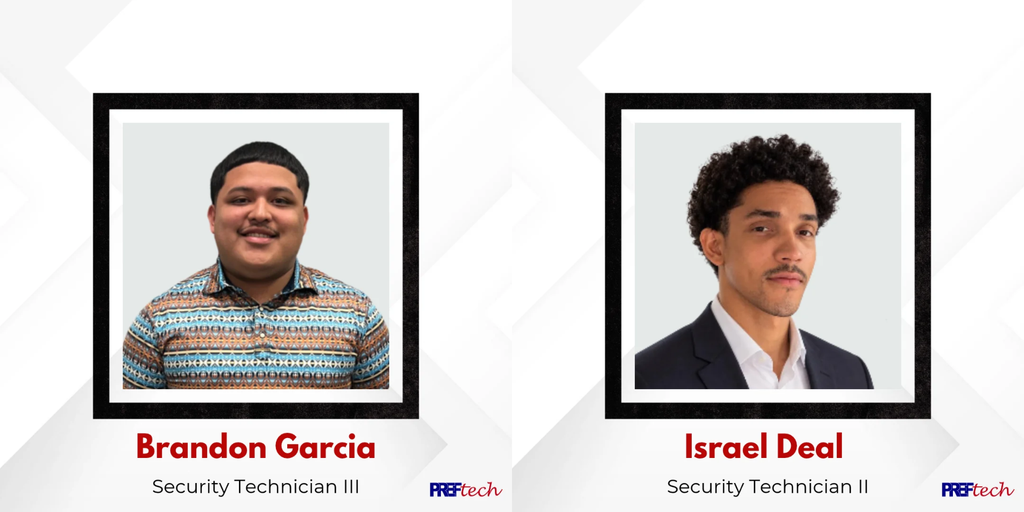
We’re excited to recognize employees who have recently reached important career milestones at Pref‑Tech. From promotions to role transitions that align with personal and professional goals, these advancements reflect the talent, initiative, and dedication of our team. We look forward to seeing the impact they make as they continue to grow and succeed in their new positions.

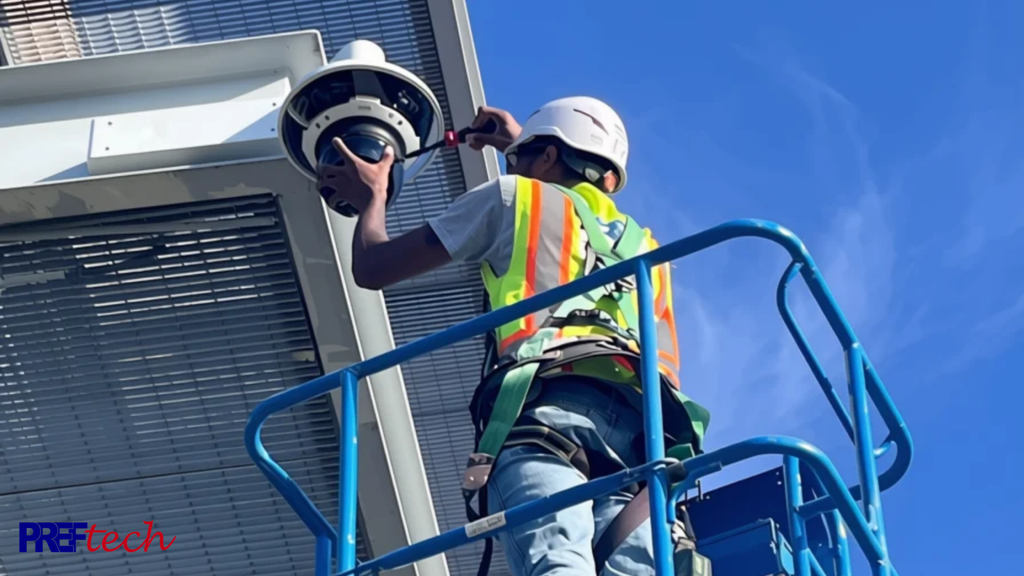
Pref-Tech’s Security Integration Academy (SIA) recently celebrated an exciting milestone with the successful completion of its first Technician Foundations pilot. The week-long program gave its first cohort an opportunity to learn by doing, building fundamental technical skills through hands-on training.
Throughout the week, participants worked with electrical fundamentals, relay logic, cable drops, LSP panel wiring and troubleshooting, door installations and electrified strikes, and camera mounting, installation, and basic configuration. The experience was designed to strengthen the practical skills technicians can continue building on throughout their careers at Pref-Tech.