The Security Craftsman- September
News & Updates from Pref-Tech – September 2026 Trust Changes Everything Last month, a great friend shared with me a quote often attributed to Aboriginal activist Lilla Watson and a group of ...



When organizations build a data center, they spend significant time evaluating utility power, backup generation, cooling infrastructure, network connectivity, commissioning teams, and long-term operational resiliency.
Physical security is often brought into the conversation much later.
That can create avoidable risk.
Modern data centers are designed around uptime, redundancy, and speed to market. Whether the facility is a hyperscale campus, enterprise data center, colocation environment, or AI-ready expansion, physical security is part of the critical infrastructure stack. Access control, video surveillance, visitor management, monitoring, and audit trails help protect the people, equipment, and operations that support continuous availability. Industry guidance consistently identifies layered security, access control, surveillance, and monitoring as foundational components of data center security.
The challenge is not finding a company that can install cameras and badge readers.
The challenge is finding a Division 28 partner that can help deliver the project, protect the schedule, and support operations long after the facility goes live.
Data center projects are often measured by megawatts, redundancy, and speed to market.
Developers focus on power availability.
Operators focus on uptime.
General contractors focus on schedule.
Physical security impacts all three.
A poorly coordinated Division 28 scope can create equipment room conflicts, delay commissioning, require rework, impact turnover schedules, and introduce operational risk after occupancy.
We’ve seen project teams spend months planning utility feeds, switchgear, UPS systems, generators, cooling plants, network pathways, and meet-me-room connectivity while treating physical security as a late-stage procurement decision.
The best projects bring Division 28 into the conversation early, alongside the teams responsible for power, communications infrastructure, and mission-critical systems.
While the exact requirements vary by owner and facility type, most data centers incorporate several layers of security.
Typical systems include:
Leading data center environments use layered security models that protect facilities from the perimeter down to individual suites, cages, white-space environments, network rooms, and critical infrastructure areas. Access control, surveillance, monitoring, and detailed audit trails are consistently identified as core components of effective data center protection.
The objective is straightforward: control who enters the facility, track where they go, document what occurs, and protect critical operations from disruption.
Many people hear “Division 28” and immediately think cameras.
In reality, Division 28 encompasses the electronic safety and security infrastructure protecting the facility.
Typical responsibilities include:
Construction specifications typically require detailed shop drawings, pathway layouts, equipment room coordination, product submittals, commissioning procedures, testing documentation, and ongoing trade coordination throughout the project lifecycle.
A capable Division 28 contractor understands that these systems are part of the facility’s operational infrastructure, not simply a collection of security devices.
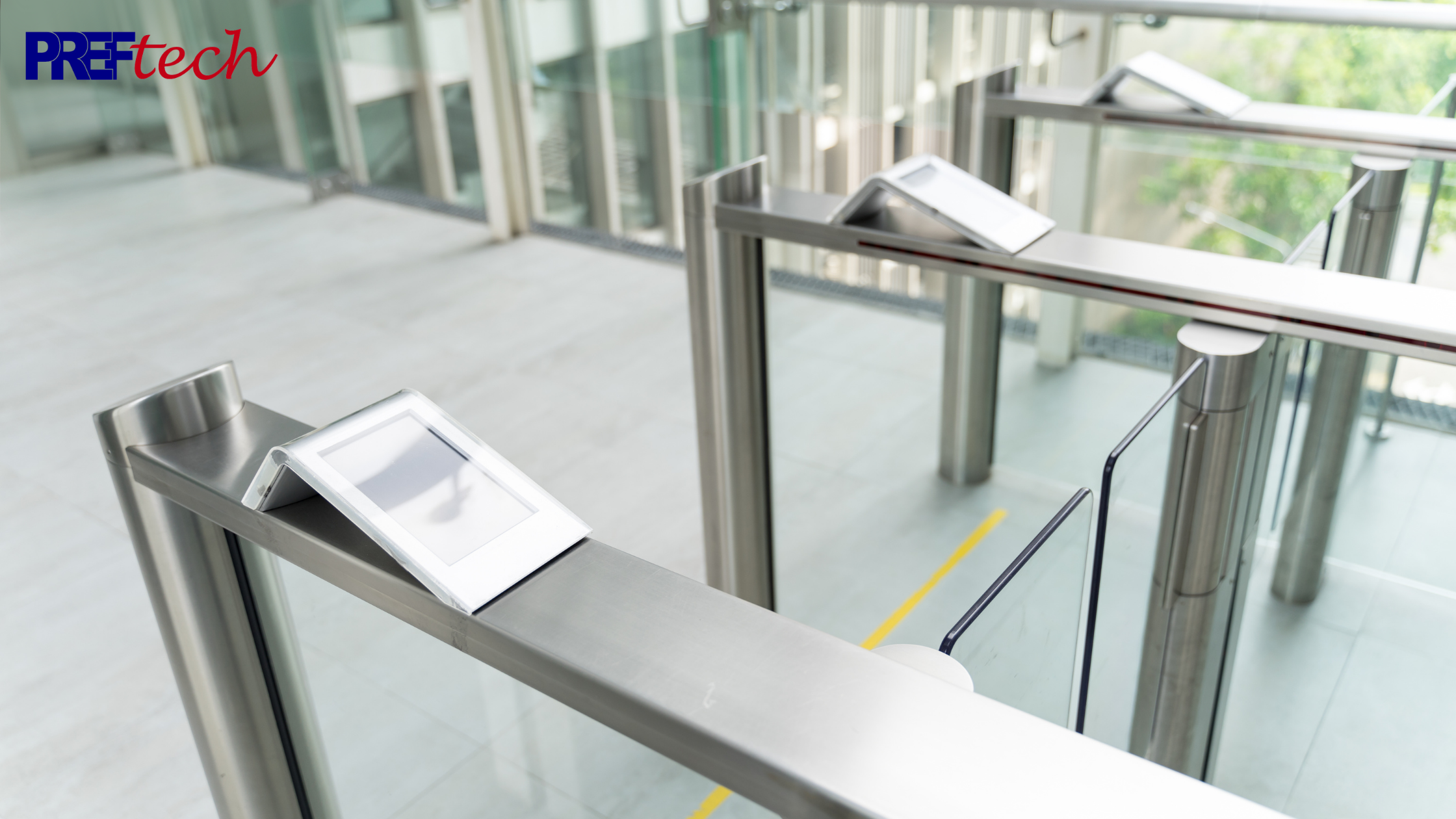
Access control is one of the most critical elements of a modern data center security strategy.
This is about much more than opening doors.
Effective access control systems help organizations:
Many facilities implement layered access models that include mantraps, visitor processing, biometric authentication, role-based permissions, anti-tailgating controls, and enhanced protection around critical infrastructure environments. Industry best practices increasingly focus on controlling access from the campus perimeter all the way down to individual rooms, cages, and equipment areas.
The best systems are designed during project planning, not added after construction decisions have already been made.
This is where successful data center projects distinguish themselves.
Physical security touches multiple disciplines, including:
Division 28 specifications routinely require coordination of pathways, power requirements, equipment room layouts, wiring methods, rack elevations, construction schedules, and installation sequencing with adjacent trades. Security contractors are expected to identify conflicts, coordinate proactively, and deliver systems without impacting overall project progression.
The earlier this coordination begins, the lower the risk of rework and schedule disruption.
A quality Division 28 program starts long before installation.
Owners, developers, and general contractors should expect comprehensive documentation, including:
Many Division 28 specifications specifically require floor plans, enlarged equipment-room drawings, pathway routing details, device locations, project management information, and coordinated installation documentation prior to construction activities.
Strong submittals reduce ambiguity, improve coordination, and help maintain schedule certainty during construction.
In mission-critical environments, installation is only the beginning.
The system must be verified, documented, and proven operational.
Security commissioning typically includes:
Construction requirements commonly require security contractors to complete pretesting and demonstrate full functionality prior to final acceptance. Specifications place significant emphasis on quality control, commissioning, testing, and operational readiness before turnover.
A reader on a door does not create security.
A commissioned, documented, and operational system does.
Texas continues to attract hyperscale, colocation, AI, healthcare, energy, and enterprise infrastructure investments.
Whether the project is a multi-building campus in Dallas-Fort Worth, an AI expansion in Austin, a healthcare environment in Houston, or an enterprise facility in San Antonio, the physical security partner should understand more than security technology.
They should understand:
The best security integrators understand that owners are not buying cameras and card readers.
They’re protecting uptime.
They’re protecting availability.
They’re protecting operational continuity.
They’re protecting every megawatt of capacity brought online.
Most importantly, they’re protecting the investment made in the facility itself.
That’s the difference between a vendor and a true data center security partner.